

Creatine is well known as a performance supplement for athletes aiming to boost strength and power. More recently, research highlights its role as a cellular energy compound with wider benefits for brain health, metabolism, recovery and healthy aging.
At the same time, emerging research in immune‑metabolic pathways suggests individuals with endometriosis may need a more personalised and cautious approach to supplementation.
What is Creatine?
Creatine is a naturally occurring nitrogen-containing compound synthesised in the liver, kidneys and pancreas from glycine, arginine and methionine. Approximately 95% is stored in skeletal muscle as phosphocreatine, where it plays a critical role in regenerating ATP (adenosine triphosphate), the primary energy currency of the cell.
Evidence-Based Health Benefits of Creatine

1. Muscle Strength and Lean Mass
Creatine supplementation consistently improves high-intensity exercise capacity, strength and lean body mass when combined with resistance training.
2. Brain Energy and Cognitive Function
Creatine supports brain bioenergetics. Research suggests potential benefits for memory, mental fatigue resistance and cognitive resilience, particularly under stress or sleep deprivation.
3. Healthy Aging and Sarcopenia Prevention
Creatine combined with resistance training may help preserve muscle mass in aging populations, supporting functional longevity and metabolic health.
4. Glucose Uptake and Metabolic Flexibility
Some studies demonstrate enhanced glucose transport into muscle when creatine is paired with exercise, suggesting supportive effects on metabolic health.
Creatine and Endometriosis
Endometriosis is a chronic inflammatory condition characterised by ectopic endometrial-like tissue, immune dysregulation, angiogenesis, fibrosis, oxidative stress and altered iron metabolism within the peritoneal cavity.
Recent mechanistic research in immunometabolism suggests:
👉🏼 Creatine influences macrophage polarisation and immune cell energy pathways.
👉🏼 Macrophages play a central role in endometriosis lesion growth, angiogenesis, and fibrosis.
👉🏼 Iron overload and oxidative stress are features of endometriosis lesions, and cellular energy pathways interact closely with iron metabolism and inflammatory signalling.
It is important to emphasise: There are currently no large-scale human clinical trials demonstrating that creatine worsens endometriosis symptoms. However, given creatine’s role in immune cell bioenergetics and cellular survival pathways, individualised clinical consideration is prudent until further human data is available.
Practical Guidance for Creatine Supplementation
For individuals without endometriosis, creatine monohydrate (3–5 g/day) remains one of the safest and most extensively researched ergogenic aids.
For individuals with diagnosed or active endometriosis:
✔️ Discuss supplementation with a qualified healthcare practitioner.
✔️ Consider trialling at low doses while monitoring symptom patterns.
✔️ Prioritise anti-inflammatory nutrition, resistance training, mitochondrial support and nervous system regulation as foundational strategies.
Looking for a high-quality option?
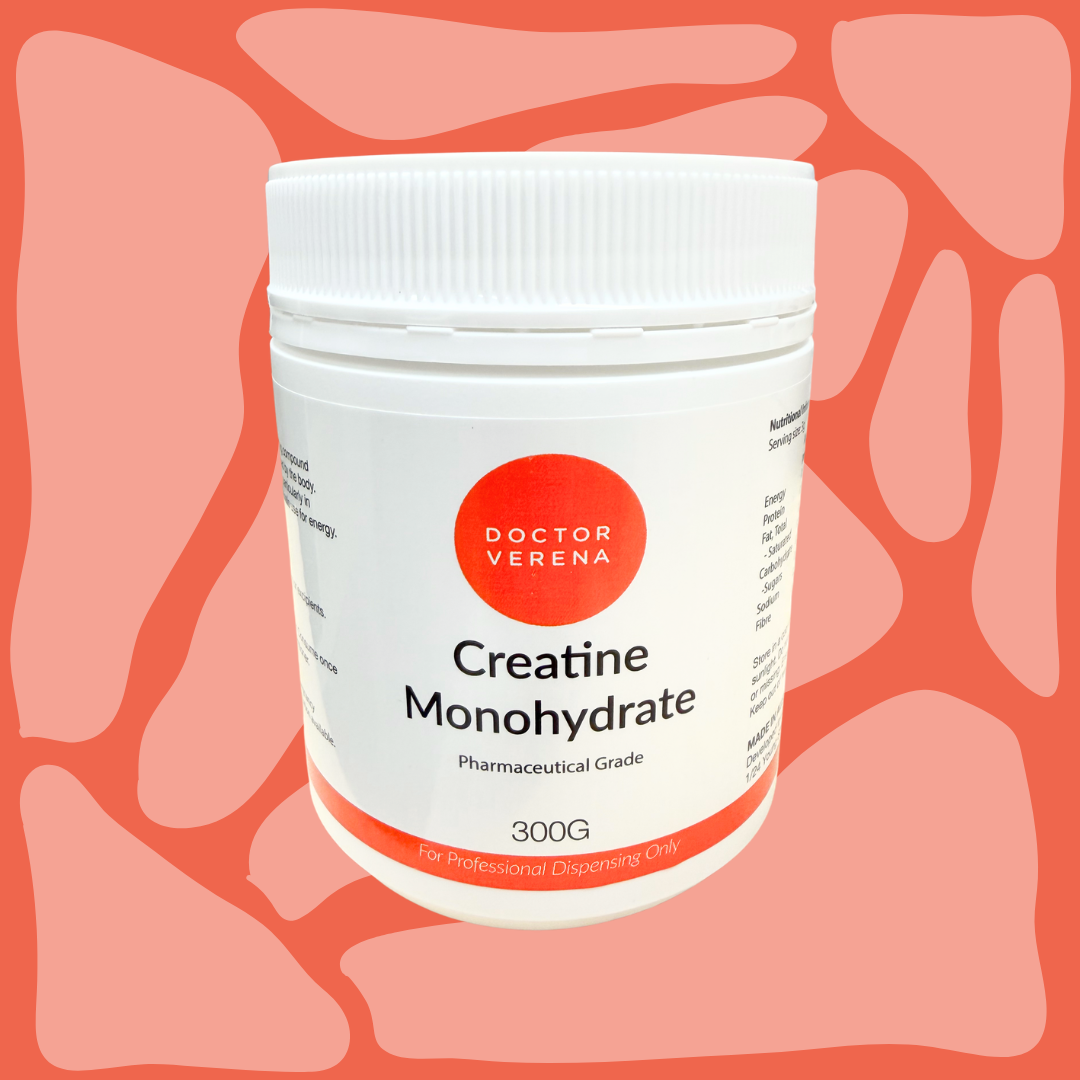
Try Doctor Verena’s Creatine Monohydrate.
Why Choose Us?
💥 100% pure creatine monohydrate
💥 High-purity micronised powder
💥 Unflavoured for flexible dosing
💥 No fillers or additives
References
Kreider, R. B., Kalman, D. S., Antonio, J., et al. (2017). International Society of Sports Nutrition position stand: safety and efficacy of creatine supplementation in exercise, sport, and medicine. Journal of the International Society of Sports Nutrition, 14(18).
Forbes, S. C., Candow, D. G., & Ferreira, L. H. B. (2022). Creatine supplementation and brain health. Nutrients, 14(5), 921.
Candow, D. G., Chilibeck, P. D., Forbes, S. C. (2021). Creatine supplementation and aging musculoskeletal health. Frontiers in Nutrition, 8, 685878.
Gualano, B., Rawson, E. S., Candow, D. G., et al. (2021). Creatine supplementation in the aging population. Experimental Gerontology, 145, 111217.
Dolmans, M. M., et al. (2003). Iron overload in the peritoneal cavity of women with endometriosis. Fertility and Sterility, 79(3), 712–717.
Symons, L. K., et al. (2018). Macrophage polarization in endometriosis. Reproduction, 156(2), R55–R66.
Vercellini, P., et al. (2022). Pathogenesis of endometriosis: the role of inflammation and immune dysfunction. Best Practice & Research Clinical Obstetrics & Gynaecology, 79, 3–15.